Port Maintenance & Mechanical Breakdown delays in Laytime
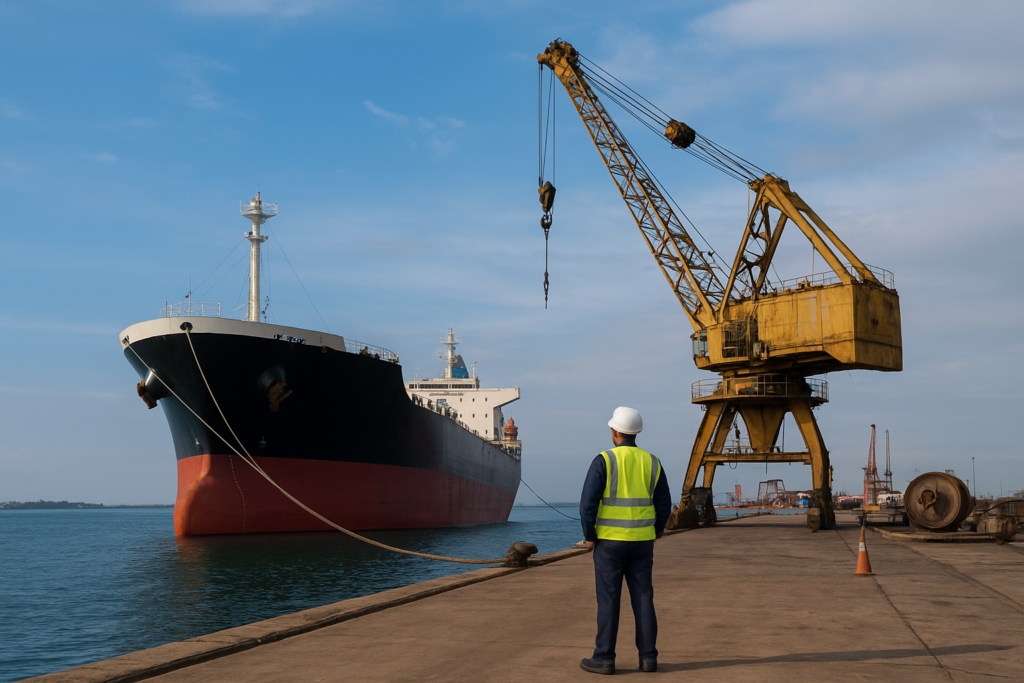
In chartering and maritime operations, one of the most debated questions arises when a vessel is ready, the berth is physically empty, yet the port cannot receive the vessel because of maintenance work, equipment failure, or mechanical breakdown.
This situation creates immediate tension between shipowners and charterers, especially when laytime is running and every hour translates into financial exposure.
The core question is simple:
If the berth is empty but the port stops operations due to port maintenance or mechanical breakdown, who bears the delay—Owners or Charterers?
This article provides a clear, practical explanation supported by maritime industry practice, standard charterparty principles, and real-world commercial logic.
1. Why This Scenario Creates Disputes
A port maintenance & mechanical breakdown stoppage falls into an ambiguous operational zone. Neither party caused the delay directly, but both sides are affected.
- Owners argue the vessel is ready and should not be penalized for port infrastructure issues.
- Charterers argue they cannot control port operations and therefore time should not count against them.
This dispute commonly appears under GENCON, ASBATANKVOY, NYPE, and most bespoke charterparties.
2. Key Principle: Is the Delay Within Owners’ or Charterers’ Sphere of Responsibility?
Most chartering disputes are resolved by identifying whether the cause of delay falls under:
- Owners’ responsibility (vessel-related issues), or
- Charterers’ responsibility (cargo operations, port operations, loading/discharging arrangements)
Port maintenance, port machinery failure, and terminal breakdowns typically fall under the charterers’ domain unless explicitly excluded.
3. Voyage Charterparty: Who Pays for the Delay?
Under a voyage charter, once laytime has started, any delay not caused by the vessel normally counts towards laytime or demurrage.
General Rule for Voyage Charter
| Scenario | Responsibility | Time Counts? | Charged As |
|---|---|---|---|
| Berth empty but vessel cannot berth due to port mechanical breakdown | Charterers | Yes | Laytime / Demurrage |
| Berth empty but closed due to planned or emergency port maintenance | Charterers | Yes | Laytime / Demurrage |
| Delay caused by port crane breakdown, conveyor failure, loading arm issues | Charterers | Yes | Laytime / Demurrage |
Why Charterers Pay Under Voyage Charter
- Port equipment and cargo handling facilities are considered part of charterers’ loading/discharging arrangements.
- The owner’s obligation is limited to providing a vessel that is ready in all respects.
- If the port is unable to receive the vessel, it is not an owner-related fault.
- Unless the charterparty expressly excludes port delays, time continues to count.
4. Time Charter: Who Pays for the Delay?
Under a time charter, the vessel remains on hire unless the vessel itself is unable to perform. Port delays do not qualify as off-hire events unless specifically stated.
General Rule for Time Charter
| Scenario | Vessel Status | Responsibility | Hire Status |
|---|---|---|---|
| Berth empty but port closed due to maintenance | Vessel is ready | Charterers | On Hire |
| Port crane, berth equipment, terminal loading arm breakdown | Vessel is ready | Charterers | On Hire |
| Any delay caused by port authority or terminal | Vessel is ready | Charterers | On Hire |
Why Charterers Pay Under Time Charter
- Off-hire applies only if the vessel is unable to perform due to its own condition or crew.
- Port delays do not affect the vessel’s readiness.
- Industry practice treats port maintenance & failures as charterers’ commercial risk.
5. How Charterparty Clauses Change the Outcome
Some charterparties contain exemptions that can shift responsibility. Understanding these clauses is critical.
Clauses that Protect Charterers (Delay Does NOT Count)
| Clause Example | Effect |
|---|---|
| “Time lost due to port authority shall not count as laytime.” | Laytime stops; owners bear delay |
| “Delays caused by terminal equipment breakdown are excepted from laytime.” | Charterers protected |
| “No demurrage payable during port maintenance periods.” | Removes charterer’s financial exposure |
Clauses that Protect Owners (Delay DOES Count)
| Clause Example | Effect |
|---|---|
| “Any time lost due to port conditions shall count as laytime.” | Charterers bear full delay |
| FIO / FIOST / FILO terms | Cargo handling entirely charterers’ responsibility |
| “Delays not caused by vessel shall count as laytime.” | Supports owners in most disputes |
6. Practical Real-World Examples
Example 1: Bulk Carrier with Conveyor Belt Breakdown
The conveyor belt used for loading is under repair. Berth is free, vessel is waiting.
Outcome:
Time counts as laytime. Delay is for charterers’ account.
Example 2: Tanker with Loading Arm Failure at an Empty Berth
Terminal mechanical arm failure stops operations.
Outcome:
Delay counts as demurrage under ASBATANKVOY unless a port-exception clause applies.
Example 3: Time-Chartered Vessel Delayed by Port Power Failure
Berth is empty but port is non-operational.
Outcome:
Vessel stays on hire — charterers pay time.
7. Final Conclusion: Who Is Responsible?
Responsibility Summary Table
| Charter Type | Port Maintenance Delay | Port Mechanical Breakdown | Berth Empty but Port Not Working | Who Pays |
|---|---|---|---|---|
| Voyage Charter | Charterers | Charterers | Charterers | Laytime/Demurrage |
| Time Charter | Charterers | Charterers | Charterers | Hire Continues |
General Rule
If the berth is empty but the port cannot operate due to port maintenance or mechanical breakdown, the delay almost always falls on the Charterers’ account unless the charterparty provides a specific exception.
This principle holds across most tanker, bulk, and general cargo trades and is supported by long-standing maritime commercial practice.